

Most people think a packing list pouch is just a fancy Ziploc bag. That’s the misconception. A good one changes how you move through airports, hostels, and hotel rooms. A bad one adds 40 grams of useless nylon to your bag. I’ve bought both kinds.
Here’s the problem scenario: You land in Bangkok at 11pm. You need your phone charger, a pen for the immigration form, your earbuds, and the hostel address you wrote down. All four items live in different corners of your 40-liter backpack. You end up squatting on the airport floor, pulling out socks and underwear, while a queue forms behind you. That moment is why this product category exists.
A proper packing list pouch solves one specific thing: access without excavation. It keeps your small, frequently-needed items in one flat, visible place. Not a packing cube for clothes. Not a toiletry bag. A document-and-electronics pouch that slides into the front pocket of your bag.
But the market is full of pouches that fail at this job. Some are too deep. Some have zippers that jam on day three. Some are so over-engineered they weigh more than the items inside them. This article separates the five pouches that actually work from the three design mistakes you should avoid.
What Actually Goes Inside a Packing List Pouch
Before you buy anything, you need to know what you’re carrying. The pouch should hold the items you reach for at least once per travel day. Not your passport — that stays in a hidden pocket. Not your laptop charger — that lives with your laptop. The pouch is for the small stuff that otherwise disappears.
The Core Loadout
- Phone charger — 1 meter cable, not 2 meters. Shorter cables tangle less.
- Power bank — 10,000mAh is the sweet spot. Anker PowerCore 10K weighs 180g.
- Universal plug adapter — the Epicka Universal Travel Adapter costs $22 and covers 150 countries.
- Pen — for immigration forms. Sounds obvious. People forget.
- Earbuds — wired ones cost $10 and never need charging. AirPods Pro 2 cost $249 and die on long bus rides.
- Small notebook — for addresses, booking references, phrases.
- Lip balm and hand sanitizer — 30ml bottles fit anywhere.
If your pouch can’t hold all of this without bulging, it’s too small. If there’s empty space after all of this, it’s too big and you’ll fill it with junk. The ideal pouch is 20-24cm wide, 12-15cm tall, and 3-5cm deep when packed.
What Should NOT Go In the Pouch
Passport and credit cards go in a hidden money belt or a zippered pocket against your body. Snacks go in a separate bag because crumbs. Liquid toiletries go in a clear 3-1-1 bag because security. A packing list pouch is not a catch-all. It’s a grab-and-go kit for the specific items listed above.
Five Pouches Worth Buying in 2026
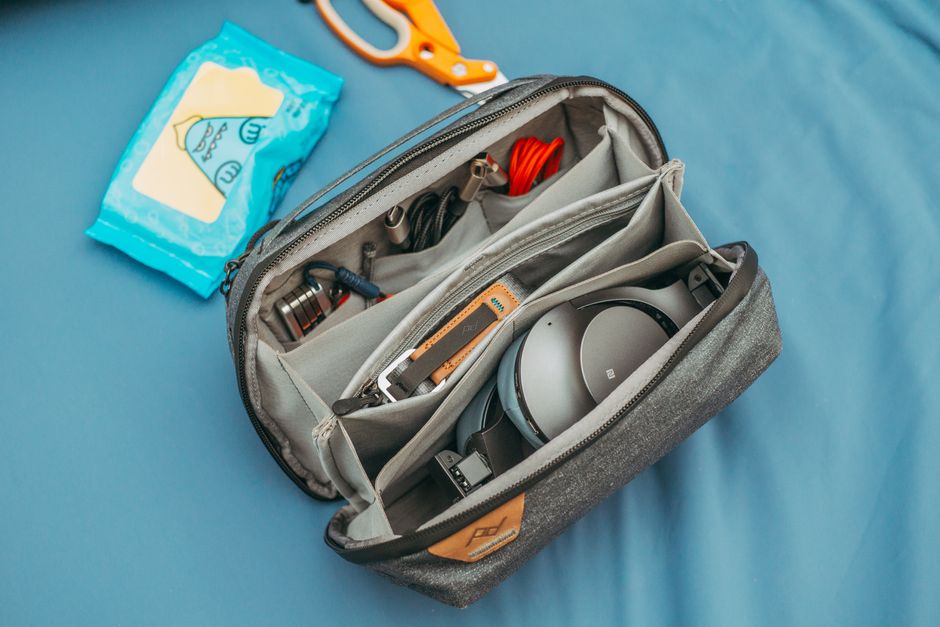
I tested these over multiple trips. Each one solves a different problem. Pick based on your travel style, not on Amazon’s bestseller list.
| Pouch | Price | Weight | Best For | Weakness |
|---|---|---|---|---|
| Tom Bihn Travel Tray | $38 | 85g | Hotel room organization | Too soft for rough handling |
| Eagle Creek Pack-It Reveal E-Organizer | $32 | 110g | Electronics and cables | Zipper feels flimsy |
| Sea to Summit Travelling Light See Pouch | $25 | 60g | Ultralight backpacking | No internal pockets |
| Osprey UltraLight Roll Organizer | $35 | 95g | Long-term travel | Roll-top is slower to open |
| Peak Design Tech Pouch | $60 | 260g | Heavy electronics users | Overkill for minimal packers |
My pick for most travelers: the Eagle Creek Pack-It Reveal E-Organizer. It has two mesh compartments, a small zippered pocket for tiny items, and a flat profile that slides into any bag. At $32 and 110g, it does the job without drama. The Tom Bihn Travel Tray is better if you move between hotels every night — it opens into a flat tray so you can see everything on the nightstand. The Peak Design Tech Pouch is the one to buy if you carry a camera battery charger, a mouse, and three cables. It’s heavy, but it’s the most structured option.
The Three Design Mistakes That Ruin Most Pouches
Most packing list pouches fail for the same three reasons. Once you see them, you can’t unsee them.
Mistake 1: Too Deep
A pouch that’s 8cm deep becomes a black hole. Items sink to the bottom and disappear. You end up dumping the whole thing out anyway, which defeats the purpose. Look for pouches that open flat or have a clamshell design. The Sea to Summit See Pouch opens fully flat and costs $25. The Eagle Creek Reveal also opens mostly flat. If a pouch only has a zipper across the top and you can’t see inside, skip it.
Mistake 2: No Internal Organization
A single empty compartment means your earbuds tangle with your charging cable tangle with your pen. You need at least two sections: one for electronics, one for paper and small items. The Tom Bihn Travel Tray has zero internal pockets but works because it opens into a wide tray. The Peak Design Tech Pouch has seven pockets and a dedicated cable loop. Most people need something in between.
Mistake 3: Heavy Fabric
Waxed canvas and thick leather look great on Instagram. They weigh 300-400g empty. That’s the weight of a full power bank. For travel, lightweight nylon or ripstop polyester wins every time. The Osprey UltraLight Roll Organizer uses 40-denier ripstop nylon and weighs 95g. A leather pouch from a fashion brand weighs three times that and costs more. Skip it.
When You Don’t Need a Packing List Pouch
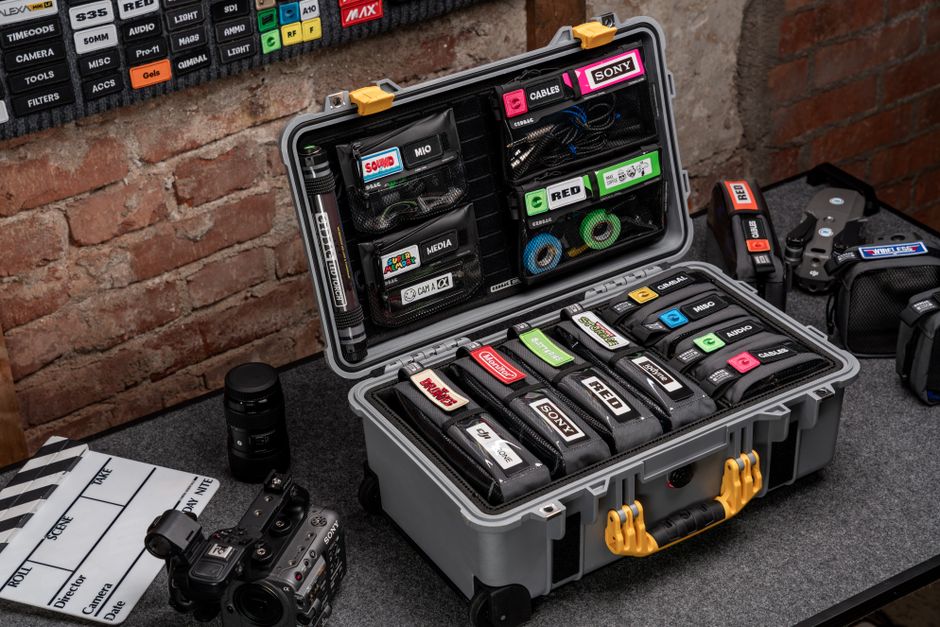
This is the part where I tell you not to buy one. If you travel with a small sling bag or a 20-liter daypack, you already have built-in organization pockets. Adding a separate pouch just adds a layer. If you’re doing a weekend trip with one change of clothes, a pouch is overkill. If you’re a minimalist who carries a phone, a charger, and nothing else, your pocket is your pouch.
The pouch earns its place on trips longer than five days, trips with multiple border crossings, or trips where you move accommodations every two nights. That’s when the repetitive dig-through-your-bag problem becomes constant. For a two-week Europe trip with six different hotels, a packing list pouch saves you roughly 10 minutes per day of searching. That’s two hours of your trip back.
Also skip the pouch if you’re tempted to buy a matching set of ten packing organizers. You need one pouch, not a system. The matching sets from brands like Bago and Calpak look coordinated but include pouches you’ll never use. Buy one good pouch and stop.
How to Pack the Pouch So It Actually Works

Buying the right pouch solves half the problem. Packing it correctly solves the other half. Most people stuff everything in randomly and then wonder why they can’t find anything.
The Flat Pack Method
Lay the pouch open flat. Place the flattest, largest items first: notebook, then power bank. Cable goes along the edge, not coiled in the middle. Coiled cables create a lump that pushes everything else around. Pen clips to the side seam. Earbuds go in the smallest pocket. The goal is a pouch that’s uniformly 3-4cm thick with no bulges.
The One-In-One-Out Rule
Every time you add something to the pouch, remove something else. This prevents pouch creep — the slow accumulation of receipts, coins, and random napkins that turns a tidy pouch into a trash bag. When you check into a hotel, empty the pouch onto the desk and sort it. Takes 30 seconds. Prevents the chaos.
For long bus rides, keep the pouch in the seat pocket in front of you, not in the overhead bin. For flights, keep it in the seatback pocket during takeoff and landing. For overnight trains in Europe or Asia, sleep with it under your pillow or looped around a bag strap. The pouch is only useful if it’s reachable.
The single most important takeaway: a packing list pouch is not about storage — it’s about keeping your 10 most-used items visible and reachable at all times, and the Eagle Creek Pack-It Reveal E-Organizer at $32 does that job better than anything else on the market right now.