The safest plan for vegetarian food in Cusco and the Sacred Valley is simple: eat lightly during your first high-altitude day, reserve one dependable plant-based meal in Cusco, and treat market food as a daytime option rather than a gamble after a long excursion. Peru’s dry season, usually May through October, makes hiking and sightseeing easier, but cold nights, early departures, and altitude can change your appetite.
You can eat very well without meat. The key is knowing which local ingredients are naturally vegetarian, how to ask about hidden broth and lard, and where a menu gives you enough protein to stay full. Menu prices below are useful 2026 planning figures, but restaurants can change them.
How the dry season changes vegetarian eating in Peru
Expect cold mornings and strong afternoon sun
Cusco sits at roughly 3,400 metres above sea level, while many Sacred Valley towns sit lower. Dry-season mornings can feel cold enough for soup, yet the sun becomes intense by late morning. That swing affects food choices. Start with a small breakfast, drink water slowly, and choose warm dishes such as quinoa soup, vegetable broth, oats, or potatoes before a walking tour. At lunch, add a proper source of protein instead of relying on bread, rice, and fried potatoes.
Build meals around Andean ingredients
Look for quinoa, tarwi, broad beans, lentils, corn, potatoes, mushrooms, avocado, and fresh cheese. These ingredients fit local cooking better than asking for a generic salad. A vegetarian causa, vegetable saltado, quinoa soup, stuffed pepper, or tacu tacu made without animal fat gives you more energy than a plate of plain rice. Ask if the dish uses chicken stock, fish sauce, pork lard, or a meat-based demi-glace.
Pack one emergency meal for long excursions
For a day trip to Pisac, Ollantaytambo, Moray, or the salt mines, carry a sealed snack from Cusco: nuts, crackers, a banana, or a simple bread roll with cheese. Bring a reusable bottle and refill only where your accommodation or guide confirms the water is treated. The winning strategy is not eating constantly. It is preventing one missed lunch from forcing you into the first unsuitable dish beside the road.
Where to find vegetarian meals in Cusco and the Sacred Valley
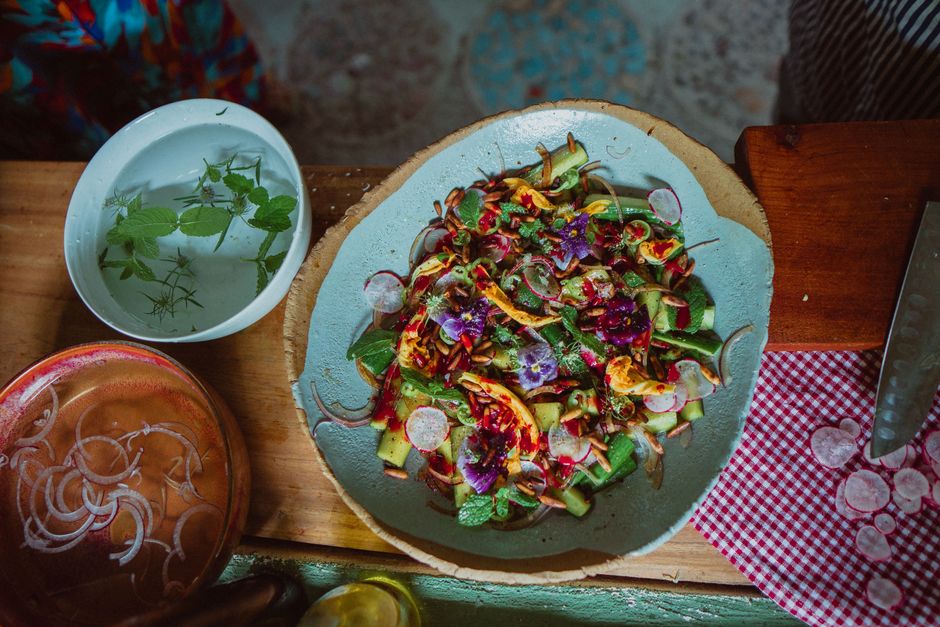
Use this table to match your meal to your budget and schedule. The strongest overall choice is Green Point in Cusco because its menu is fully plant-based and clearly describes dishes. In the Sacred Valley, Muña is the practical mid-range pick for a sit-down meal with local ingredients and vegetarian choices.
| Place | Area | Useful vegetarian choice | Published price | Best use |
|---|---|---|---|---|
| Green Point | San Blas, Cusco | Vegan saltado | S/42 | Reliable dinner after sightseeing |
| Green Point | San Blas, Cusco | Andean vegetable grill | S/70 | Shared meal with local produce |
| Muña Restaurante | Urubamba | Mushroom saltado with cauliflower rice | S/37 | Valley lunch |
| Muña Restaurante | Urubamba | Quinoa and vegetable soup | S/22 | Light meal at altitude |
| El Huerto | Urubamba | Sacred Valley corn cream soup from its vegan menu | S/64 | Special-occasion dining |
Choose Cusco for certainty
Cusco has the largest concentration of dedicated vegetarian and vegan restaurants, so it is the best place to reset after arrival. Green Point’s published menu lists dishes such as vegan saltado, pad thai, tacu tacu, and a plant-based anticucho plate. Organika is another known Cusco option, but check its current menu and opening hours before walking across town.
Choose Urubamba for local produce
The Sacred Valley rewards advance planning. Towns are spread along the road, and a restaurant may be closed between lunch and dinner. Muña Restaurante’s menu lists vegetarian-friendly dishes, including mushroom saltado and quinoa soup. El Huerto’s published menu is more expensive, but it offers a clear vegan section built around local produce.
How to order vegetarian food without hidden meat ingredients
Use a short Spanish request
Say, “Soy vegetariano. No como carne, pollo ni pescado.” If you are vegan, add, “Tampoco como huevos, leche, queso ni mantequilla.” Then ask, “¿Tiene caldo de pollo, manteca o salsa de pescado?” This matters because a dish can look full of vegetables while the rice, beans, soup, or sauce contains animal ingredients.
- Say your restriction before naming the dish. Lead with vegetarian or vegan, not with the menu item. This gives the cook a chance to explain what can be changed.
- Ask what the dish is cooked in. Confirm the broth, frying oil, butter, lard, cheese, and sauces. “Sin carne” does not always answer every question.
- Request one simple adjustment. Ask for vegetables or mushrooms instead of meat, but avoid building a complicated custom plate during a busy lunch service.
- Check the plate before eating. Look for shredded chicken, tiny pieces of bacon, fish sauce, or meat gravy mixed into rice and noodles.
- Carry the phrase in writing. A translated note on your phone helps in markets, rural villages, and places where staff speak mainly Spanish or Quechua.
Order local food before international food
Start with quinoa soup, vegetable causa, mushroom saltado, tacu tacu, choclo, potatoes, or stuffed rocoto made without meat. These dishes give the kitchen familiar ingredients to work with. A plain green salad is a weak fallback after a six-hour excursion; it may leave you hungry, and raw produce requires more care with washing. For a first meal after arrival, choose something cooked, warm, and modest in size.
My strongest recommendation: eat at Green Point before your Sacred Valley transfer
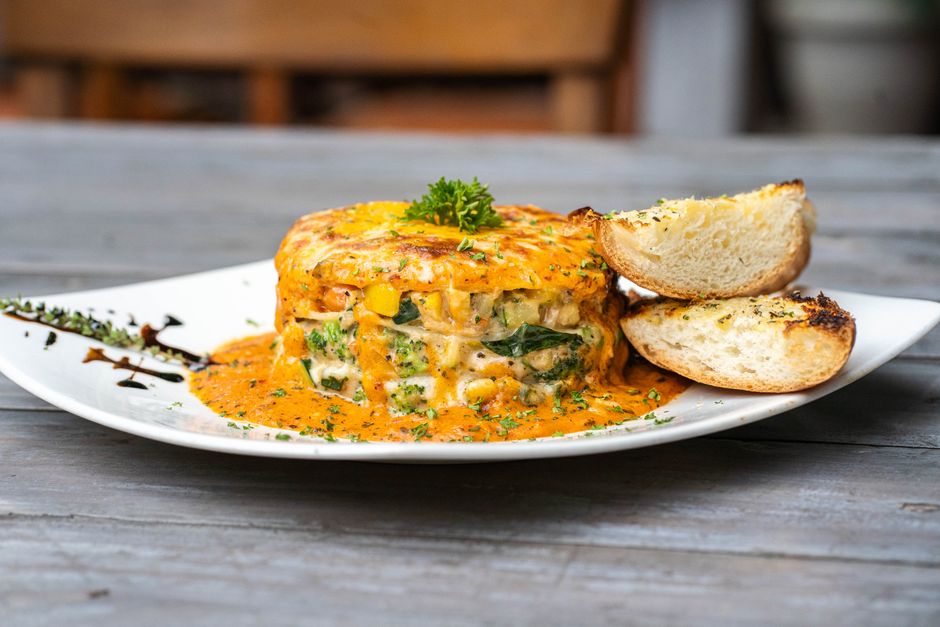
Eat your most carefully planned vegetarian dinner in Cusco, not on the road to the Sacred Valley. Green Point is the best first-night choice for travellers who want a fully plant-based menu, clear dish descriptions, and enough variety to satisfy a mixed group. The vegan saltado costs S/42, the pad thai costs S/45, and the plant-based Andean grill costs S/70 according to its current published menu. Those prices make it easier to set a food budget before leaving your hotel.
The first-night logic is practical. Travel fatigue, altitude, and an early departure can make a remote restaurant feel like a chore. In Cusco, you can ask questions in a relaxed setting, stop eating when you feel full, and return to your accommodation quickly. Choose the vegan saltado if you want a filling plate of vegetables, mushrooms, rice, potatoes, and sauce. Choose the tacu tacu if you want a more Peruvian-style dish built around beans and rice. For two people, the lentil curry feast is listed at S/95 and gives you a better shared meal than ordering several small starters.
When Green Point is not the right choice
Do not choose it for a rushed airport transfer or a late arrival without checking hours first. It is also not the best pick if your main goal is a cheap local market meal. A restaurant in San Blas costs more than a two-course almuerzo at Mercado de San Pedro, where a basic meal may be around S/8 to S/12, but market stalls require more careful questioning about broth, oil, and cross-contact.
What to do after the meal
Walk back slowly, drink water, and avoid scheduling a strenuous climb that night. A heavy dinner followed by a steep uphill walk can feel worse than the food itself. For the next morning, arrange a simple breakfast through your accommodation or buy fruit and bread from a clean shop the previous evening.
Vegetarian food questions travellers ask before a Sacred Valley day trip
Can I eat vegetarian food at San Pedro Market?
Yes, but go for a busy stall serving food that is cooked and hot. Ask specifically about chicken broth, pork fat, and meat mixed into rice or beans. Market lunches are cheap and useful for adventurous travellers, but they are less predictable than a dedicated vegetarian restaurant. Arrive around lunchtime, keep your order simple, and avoid raw sauces if you are still adjusting to altitude and local water.
Is quinoa soup enough for lunch?
Not usually after a full day of walking. A bowl of quinoa soup is a good light meal, especially during your first day, but add beans, lentils, cheese, eggs, tofu, or mushrooms if available. Muña lists quinoa and vegetable soup at S/22, which makes it a sensible starter or light lunch. Add bread or a second dish if you have an afternoon hike.
What should vegans avoid in Peru?
Watch for butter in bread, cheese on soups, milk in hot drinks, eggs in pasta, and mayonnaise in sandwiches. Ask about “mantequilla,” “queso,” “huevo,” and “mayonesa.” Some sauces also contain fish or meat stock even when the main dish is vegetable-based. If the staff cannot answer, order a plainly cooked combination of potatoes, corn, vegetables, beans, and avocado instead of guessing.