
Most people waste their Olympic National Park trip driving between lookouts and standing in line for the same photo. You can do better. This guide gives you a concrete 3-trail plan that covers the park’s three distinct ecosystems—alpine, rainforest, and coast—without burning your entire vacation in the car.
The core problem with Olympic is geography. The park wraps around the Olympic Mountains, and there’s no road through the middle. Highway 101 circles the park, which means driving from Hurricane Ridge to the Hoh Rain Forest takes about 3 hours. If you try to see everything in one day, you’ll spend more time on pavement than on trail.
Here’s the fix: pick one trail per day, stay in a central base, and accept that you won’t see every corner of the park. The three trails below deliver the highest payoff per mile hiked.
The 3-Trail Plan at a Glance
This table shows the exact logistics for each trail, including drive times from the town of Port Angeles, which is the most practical base for a 3-day trip.
| Trail | Ecosystem | Distance | Elevation Gain | Drive from Port Angeles | Best Time to Start |
|---|---|---|---|---|---|
| Hurricane Hill | Alpine | 3.2 miles round trip | 650 ft | 45 min | 7:00 AM |
| Hall of Mosses Loop | Rainforest | 1.1 miles round trip | 100 ft | 2 hr 15 min | 8:30 AM |
| Rialto Beach to Hole-in-the-Wall | Coastal | 3.3 miles round trip | Minimal | 1 hr 30 min | Check tide tables |
That’s three trails, three ecosystems, and a total of about 7.6 miles of hiking. Manageable for most fitness levels. No backcountry permits required for any of these day hikes.
Trail 1: Hurricane Hill — The Alpine Warm-Up
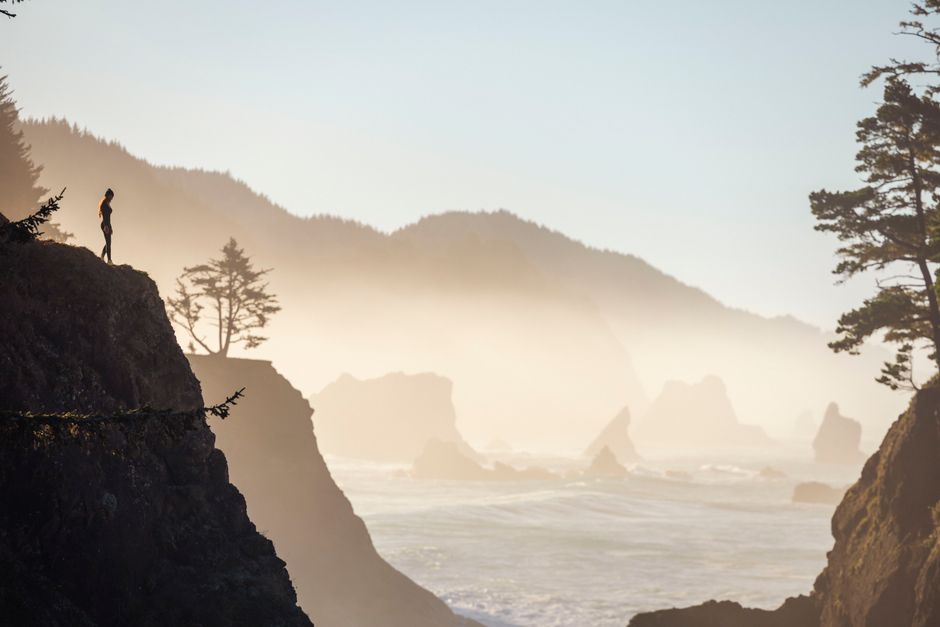
Start here. The Hurricane Hill trailhead sits at the end of the Hurricane Ridge Road, and the trail climbs gently to a 5,757-foot summit with panoramic views of the Bailey Range and, on clear days, Vancouver Island.
The reason to hike this first: it’s the easiest of the three to access from Port Angeles, and the road up is paved the entire way. You’ll get your legs moving without committing to a long drive before breakfast.
Concrete details: the trail is 1.6 miles one way, with 650 feet of elevation gain. It’s paved for most of the route, which makes it accessible for strollers and wheelchairs. The summit has a viewing platform and interpretive signs. Parking at the trailhead fills by 9:00 AM on summer weekends, so the 7:00 AM start time in the table is not a suggestion—it’s the difference between parking at the trailhead and parking half a mile down the road.
One thing most guides don’t tell you: the Hurricane Ridge Road closes frequently in winter and can close any time of year for weather. Check the Olympic National Park road status page before you leave. If the road is closed, skip this trail and go straight to the rainforest instead. Don’t wait around hoping it will reopen.
For a longer option, continue past Hurricane Hill to the Elwha River Valley viewpoint. It adds about 1.5 miles round trip and gives you a view of the valley that most day hikers never see.
Trail 2: Hall of Mosses — The Rainforest That Justifies the Drive
The Hoh Rain Forest is a 2-hour drive from Port Angeles, and the Hall of Mosses Loop is only 1.1 miles long. Some people skip it because the distance-to-drive ratio feels wrong. Those people are wrong.
The Hall of Mosses is the most concentrated dose of temperate rainforest in the lower 48 states. Bigleaf maples draped in clubmoss, Sitka spruce that are 300 feet tall, and a forest floor covered in ferns. It feels like walking through a place that time forgot.
The loop starts at the Hoh Rain Forest Visitor Center. Go counterclockwise. Most people go clockwise, which means you’ll have the second half of the loop mostly to yourself. The entire trail is flat and well-maintained, with boardwalks over the wet sections.
If you want more distance, add the Spruce Nature Trail, which branches off from the same trailhead. It’s another 1.2 miles and follows the Hoh River. Between the two trails, you’ll cover about 2.3 miles total, which takes most people about 90 minutes at a leisurely pace.
Avoid the Hoh on weekends in July and August. The entrance station backs up for over an hour by mid-morning. Go on a Tuesday if you can. If you must go on a weekend, arrive before 8:00 AM or after 3:00 PM.
Trail 3: Rialto Beach to Hole-in-the-Wall — The Tide-Dependent Coast
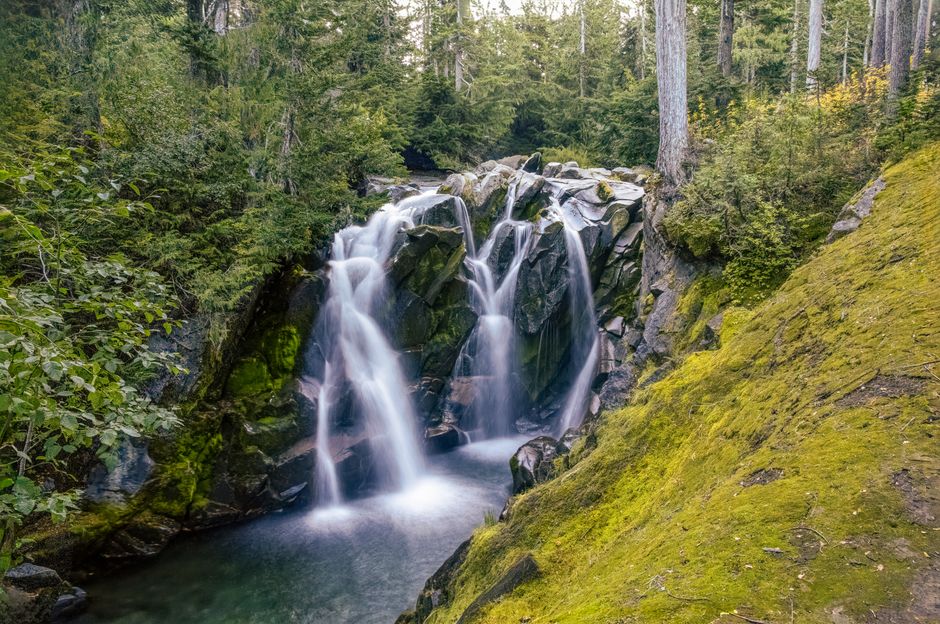
This is the trail that most first-time visitors get wrong. Not because it’s hard—it’s flat and straightforward—but because they don’t check the tide tables and end up stranded or forced to turn back early.
The hike from Rialto Beach to Hole-in-the-Wall is 3.3 miles round trip along a pebble beach. The destination is a massive rock arch with tide pools full of sea stars, anemones, and small crabs. But you can only reach the arch at low tide. At high tide, the water covers the route around the headland.
Here’s the exact procedure: check the tide chart for La Push, Washington. You want to start the hike about 2 hours before low tide. That gives you time to walk out, explore the tide pools, and walk back before the water rises. The National Park Service posts tide charts at the trailhead, but you should check online before you leave your hotel.
Wear shoes you don’t mind getting wet. The beach is made of smooth stones, not sand, and the surf can sneak up on you. Hiking poles help on the unstable surface. Bring a dry bag for your camera and phone.
If you want a longer coastal hike, continue past Hole-in-the-Wall to the Chilean Memorial, which is about 2 more miles each way. But only do this if you have a full day and a very clear low tide window.
The Mistake That Ruins Most Olympic Hiking Trips
People treat Olympic like a single park. It’s not. It’s three parks separated by a highway and a mountain range. The mistake is trying to see all three ecosystems in one day.
Here’s what that looks like: wake up in Port Angeles, drive to Hurricane Ridge, hike for an hour, drive 2 hours to the Hoh, hike for 30 minutes, drive 1.5 hours to Rialto, realize the tide is wrong, drive back to Port Angeles in the dark. That’s 5+ hours of driving for 2 hours of hiking.
The fix is simple: one ecosystem per day. Stay in Port Angeles for the alpine day, stay in Forks for the rainforest and coast days. Forks is a small logging town with a few motels and restaurants, but it cuts your driving time to the Hoh and Rialto by more than half.
If you only have one day, pick one trail. My pick: the Hoh Rain Forest. It’s the most unique ecosystem in the park, and there’s nothing else like it in the continental United States. Hurricane Ridge is beautiful, but it looks like a lot of other alpine areas in the Cascades. The Hoh is one of a kind.
What to Pack for Olympic Day Hikes
Olympic National Park gets 140 inches of rain per year in the rainforest and less than 30 inches at Hurricane Ridge. You need gear that works in both wet and dry conditions.
- Rain jacket: The Outdoor Research Helium II ($159) weighs 6.4 ounces and packs down to the size of a fist. It’s the best weight-to-protection ratio for this park.
- Hiking shoes: The Salomon X Ultra 4 GTX ($165) handles wet trails and rocky beaches equally well. Skip waterproof boots for the beach—you’ll get splashed anyway.
- Daypack: The Osprey Daylite Plus ($75) is 20 liters, which is enough for a rain jacket, water, snacks, and a camera. It has a mesh back panel that keeps your shirt from getting soaked with sweat.
- Water filter: The Sawyer Squeeze ($39) weighs 3 ounces and lets you refill from any stream. The park has water at visitor centers, but not on the trails.
- Tide chart: Print it or screenshot it. Cell service is nonexistent on Rialto Beach.
Do not bring cotton socks. Cotton holds moisture, and wet feet in Olympic National Park means blisters by mile two. Merino wool or synthetic only. The Darn Tough Hiker Micro Crew ($24) is the standard for a reason.
When to Skip Olympic Entirely
Olympic National Park is not a good choice in November, December, or January. The Hurricane Ridge Road closes for snow, the rainforest trails flood, and the coast is hammered by winter storms. You’ll pay full price for a fraction of the experience.
The sweet spot is July through September. The weather is driest, all roads are open, and the wildflowers are out at Hurricane Ridge. June is also good, but expect lingering snow at higher elevations and more rain in the rainforest.
If you’re set on a winter trip, go to the coast instead. Rialto Beach and Second Beach are dramatic in winter storms, and the tide pools are still accessible at low tide. Just skip the alpine and rainforest sections entirely.
For a 3-day trip in summer, the plan is simple: Day 1, Hurricane Hill. Day 2, Hall of Mosses. Day 3, Rialto Beach. Stay in Port Angeles on night 1, Forks on nights 2 and 3. Book your lodging at least 3 months in advance—Forks has limited rooms and they fill up fast in July and August.
That’s the whole plan. Three trails, three days, three ecosystems. No wasted driving, no crowded overlooks, no tide-related disappointments. Just the best hiking Olympic National Park has to offer.